
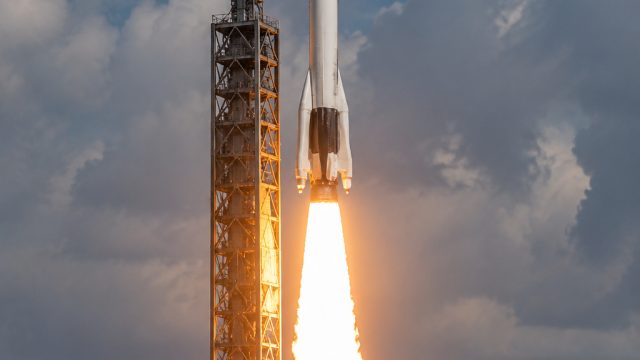
This week, NASA is set to launch a pioneering mission aimed at extending the lifespan of the Neil Gehrels Swift Observatory, a satellite that has played a crucial role in astronomical research for nearly 22 years. As technology advances and aging equipment poses challenges, this mission highlights the importance of revitalizing space assets for ongoing scientific discovery.
The Swift Observatory: A Legacy of Discovery
Since its launch in 2004, the Swift Observatory has been instrumental in observing cosmic phenomena, including gamma-ray bursts, supernovae, and other transient events. Its unique ability to rapidly respond to astronomical events has provided invaluable data to scientists around the globe.
Importance of the Swift Observatory
- Real-time monitoring of cosmic events
- Contribution to our understanding of the universe's history
- Collaboration with various space agencies and institutions
However, in 2024, researchers identified a concerning trend: the observatory was losing its orbital altitude more quickly than anticipated. This decline in orbit could severely limit its capabilities, potentially ending its mission prematurely.
Introducing the LINK Spacecraft
In response to this predicament, NASA has developed a revolutionary robotic spacecraft known as LINK. Designed specifically to perform orbital maneuvers, LINK aims to boost the Swift Observatory back to its optimal operational altitude.
Technical Innovations Behind LINK
LINK is equipped with advanced technology that allows it to autonomously dock with the Swift Observatory. This capability marks a significant milestone in space engineering, as it demonstrates NASA's ability to repair and extend the life of existing space assets, rather than relying solely on new launches.
Mission Objectives
- Enhance the Swift Observatory's operational altitude
- Ensure continued data collection and transmission
- Demonstrate autonomous docking technology
Why This Mission Matters Now
The urgency of the LINK mission cannot be overstated. As we face an era of increased space exploration and a growing number of satellites in orbit, the need to maintain and rejuvenate existing space assets is critical. Utilizing LINK not only allows for the continuation of valuable scientific research but also sets a precedent for future missions aimed at preserving and maximizing the functionality of current space technology.
Broader Implications for Space Exploration
The success of the LINK mission could pave the way for similar initiatives, potentially changing how we approach satellite maintenance. Rather than launching new telescopes, we might focus on enhancing our current fleet, leading to cost savings and extended scientific output.
Conclusion
The upcoming launch of LINK is a significant step in our quest for knowledge about the universe. By empowering the Swift Observatory to continue its mission, NASA is not only preserving a crucial tool for research but also setting the stage for innovative approaches in space technology. As we await the launch, the excitement surrounding this groundbreaking mission is palpable, reminding us once again of the ingenuity and resilience of human exploration.