
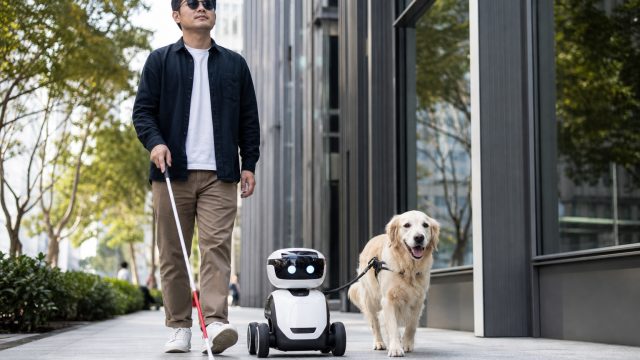
Revolutionizing Mobility: Can Robots Replace Guide Dogs?
As technology continues to advance at breakneck speed, a new frontier is emerging in mobility solutions for individuals with visual impairments. An Israeli startup has unveiled a groundbreaking robot designed to assist those who rely on guide dogs. This development raises an important question: can a robot truly replace the beloved guide dog?
Understanding the Need for Robot Assistance
For many visually impaired individuals, guide dogs are more than just companions; they are essential partners in navigating the world. These animals provide not only mobility assistance but also emotional support. However, the growing demand for assistive technologies has paved the way for innovative solutions, making robot-assisted navigation an exciting prospect.
The Role of Robotics in Mobility Aid
Robotic assistance is not merely about developing machines to navigate spaces. It's about creating empathetic companions that can enhance the quality of life for users. The Israeli startup's robot is designed to learn and adapt to the environment, potentially offering enhanced reliability and safety over traditional methods.
- Real-time obstacle detection and avoidance
- Integration with mobile devices for seamless navigation
- Voice interaction capabilities for user-friendly operation
Current Innovations in Mobility Technology
As we explore the implications of robotic guide dogs, it's essential to examine current innovations that are transforming mobility aids. Technologies like lidar, GPS, and AI have made significant strides in enhancing navigation systems. Let's take a closer look at some of these advancements:
Advanced Sensory Technologies
Modern robots utilize sophisticated sensory technologies to perceive their surroundings. This includes:
- Lidar: High-resolution 3D mapping capabilities that allow for precise navigation.
- Artificial Intelligence: Machine learning algorithms that enable robots to adapt their movements based on environmental changes.
- Computer Vision: The ability to recognize and respond to objects in real time, enhancing user safety.
Benefits of Robotic Mobility Aids
While guide dogs offer a unique companionship, robotic aids present several compelling advantages:
- 24/7 Availability: Unlike dogs, robots do not require rest or care.
- Customizable Features: Robots can be programmed to meet individual preferences and needs.
- Reduced Allergies: For those allergic to dogs, robots provide a hypoallergenic alternative.
Challenges and Considerations
Despite the exciting prospects of robotic assistance, several challenges must be addressed before these technologies can fully complement or replace guide dogs. Key considerations include:
Technical Limitations
While the technology is promising, robots still face limitations in unpredictable environments, such as crowded public spaces or rural areas without clear pathways. Ensuring reliable performance in these situations is critical for user trust.
Emotional Connection
Guide dogs provide an emotional bond that is difficult for machines to replicate. Understanding and addressing the emotional needs of visually impaired individuals is vital in the development of these robotic companions.
Why This Matters Now
The urgency surrounding this innovation cannot be overstated. With an increasing number of individuals facing mobility challenges, the demand for effective solutions has never been greater. Furthermore, as cities become more congested and complex, additional tools for navigation are essential.
The conversation around the potential of robotic guide dogs also aligns with broader trends in technology, where advancements are continually reshaping our interactions with the world. As we stand on the brink of this technological transformation, it is crucial for stakeholders—including developers, users, and healthcare professionals—to collaborate in creating solutions that prioritize user experience and accessibility.
Conclusion
The question of whether a robot can replace a guide dog is not simply a matter of technology; it is a profound exploration of how we can enhance the lives of those with visual impairments. While the innovations introduced by the Israeli startup are promising, ongoing dialogue and development will determine the future of mobility assistance. As technology evolves, so too must our understanding of its role in creating a more inclusive world.