
Key Takeaways
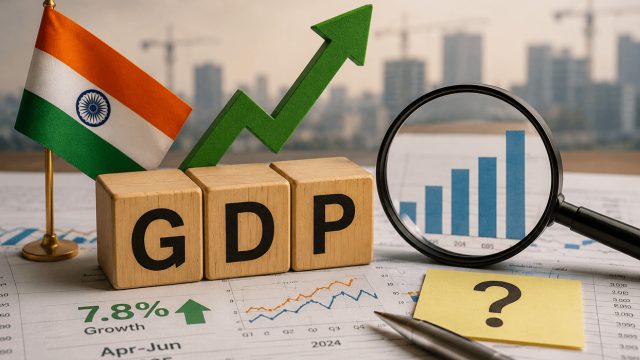
- India's GDP growth reached 7.8% in April-June 2023.
- Former finance secretary highlighted issues with revised economic data.
- Critics claim growth figures are inflated due to a lower revised base.
- New framework for GDP calculation has sparked extensive discussion.
- Implications of GDP revisions are significant for investors and policymakers.
Understanding the Controversy
The recent announcement of a 7.8% year-on-year GDP growth for India in the April to June quarter is stirring controversy. While this figure exceeded many analysts' expectations, the debate centers on the methods used for calculating this growth. Former finance secretary Subhash Chandra Garg has raised concerns regarding changes made to last year's economic data, suggesting that these revisions have artificially inflated the growth figure.
Revising Historical Data
In February, a new framework for calculating economic output was introduced, which adjusted previous quarterly growth figures. Critics argue that these adjustments have resulted in a lower base for comparison, thus making the recent growth appear stronger than it may actually be. For instance, nominal GDP for the same quarter in 2022 was reduced from approximately 86 trillion rupees to a significantly lower figure. This recalibration raises questions about the integrity of the growth rate that the government is now celebrating.
The Economic Impact
For the Indian government, the revised growth figures present an opportunity to showcase resilience amid global economic uncertainties. However, such revisions can have far-reaching effects on investor confidence and economic policy. If growth is perceived as inflated, it may lead to skepticism about the government's economic management capabilities. This is particularly relevant in the context of Southeast Asia, where regional economic collaboration is becoming increasingly vital.
Investor Reactions
Investors often look for stability and predictability in economic data. While a higher GDP growth might be appealing at first glance, the underlying controversy could lead to hesitation among potential investors, especially in a market like Indonesia, which is part of the ASEAN economic framework. As countries in this region work towards economic integration, maintaining transparent and reliable economic indicators becomes paramount.
Global Perspectives
With India being one of the largest economies in the world, the implications of its GDP revisions are not confined to its borders. Stakeholders across the globe, from policymakers in Jakarta to investors in Bali, are closely monitoring these developments. The scrutiny over India's economic data highlights the importance of accuracy and transparency, especially in a world still grappling with the effects of the COVID-19 pandemic and fluctuating market dynamics.
Future Considerations
As the debate continues, it will be crucial for the Indian government to address these concerns and provide clarity on the data revisions. Transparency is key to restoring confidence among investors and ensuring that India is viewed as a stable economic partner in the region. For the future, this episode serves as a reminder of the delicate balance between presenting a positive economic outlook and maintaining factual accuracy.
Conclusion
The ongoing debate surrounding India's revised GDP growth figures underscores a critical juncture for the country's economy. As stakeholders navigate the implications of these changes, the focus will likely remain on ensuring the credibility of economic data. This situation is a vital reminder of the need for transparency and accuracy in economic reporting, which not only influences domestic policy but also affects India's standing in the global market.



