
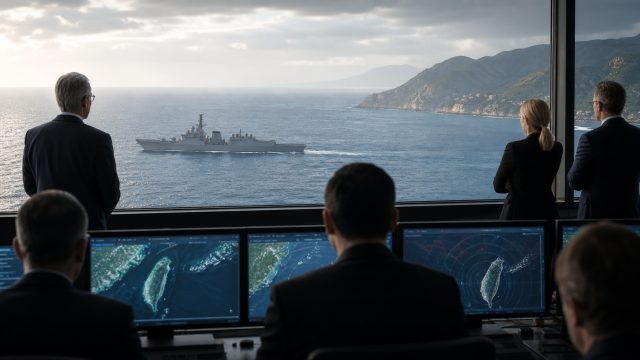
In a significant escalation of geopolitical tensions, the United States, United Kingdom, France, and Germany have jointly raised alarms regarding increased Chinese military operations off the eastern coast of Taiwan. This development comes at a time of rising regional anxiety, highlighting the potential for conflict and the need for international diplomacy.
The Context of Rising Tensions
The Taiwan Strait has been a focal point of military drills and naval movements, particularly following China's assertive positioning of its forces in the area. Recently, Chinese naval vessels, including an advanced aircraft carrier, have been spotted conducting operations near Taiwan, prompting a united response from Western nations worried about the implications for regional stability.
The Joint Statement
In an unusual move, the four countries issued a collaborative statement emphasizing their worries about China's assertive maritime claims and the potential threat these pose to international shipping routes and regional security. The statement underlines that such actions undermine the stability in the Indo-Pacific region and violate the principle of freedom of navigation.
Why This Matters Now
The concern surrounding Chinese patrols is exacerbated by the shifting geopolitical landscape. With the ongoing tensions between China and Taiwan, these military activities signal China's growing confidence to assert its claims over Taiwan, a territory it considers a breakaway province. As other nations observe these developments closely, the potential for miscalculations increases, heightening the risk of confrontation.
The Role of International Diplomacy
- The need for dialogue: Experts argue for greater diplomatic engagement to de-escalate tensions.
- Alliance formations: The situation could lead to strengthened military alliances in response to perceived threats from China.
- Economic implications: Disruptions in the Taiwan Strait could impact global trade significantly.
Military Preparedness and Global Reactions
In light of these developments, the military readiness of nations bordering the Taiwan Strait is under scrutiny. Countries in the region, particularly Japan and Australia, are closely monitoring the situation and may increase their military preparedness as a precautionary measure.
Public Sentiment and Media Coverage
Media coverage of these events has been extensive, with various news outlets highlighting the potential consequences of a military confrontation in the region. Public sentiment in both Western nations and China is complex, as citizens grapple with the implications of these military escalations and their potential impact on global peace.
Conclusion: A Call for Calm
The recent increase in Chinese military activity near Taiwan has marked a critical juncture for international relations. As the world watches, it is imperative for all involved parties to pursue diplomatic channels to prevent conflict and maintain the fragile peace in the region. The call for calm and dialogue is more important than ever as the risks of miscommunication and military escalation loom large.